Oncology and precision medicine trials continue to evolve, and histology & anatomic pathology has become increasingly important in supporting biomarker-driven research, tissue-based analyses, and translational science. Sponsors require laboratory partners that can both deliver reliable histology services and also integrate seamlessly with molecular and other specialty laboratory capabilities to support increasingly complex study designs.
As part of our ongoing Q&A series highlighting the experts behind Medpace’s central labs, we spoke with Robert McGee, MD, PhD, Senior Medical Director, Clinical Laboratory, about building Medpace’s histology program, the future of digital pathology, and how integrated laboratory collaboration supports Sponsors across therapeutic areas.

Senior Medical Director, Clinical Laboratory
Building and Expanding a Robust Histology Program
What initially drew you to joining Medpace?
When I joined, Medpace was expanding its histology and anatomic pathology services in response to growing Sponsor demand. What attracted me most was the opportunity to help build a histology program from the ground up. At Medpace, there was an opportunity to create a program intentionally – designing workflows, infrastructure, and services in a way that best supports clinical trials and Sponsor needs.
Over the past several years, that effort has included establishing the Cincinnati histology laboratory, supporting expansion efforts in Singapore, and helping lay the groundwork for additional growth in Belgium. Across these locations, Medpace has globally harmonized its histology operations through standardized instrumentation, workflows, and processes – helping ensure consistent, reliable results and operational alignment across studies and regions.
Applying Pathology Science to Clinical Trials
How has your background shaped your work at Medpace?
What initially drew me to pathology was the ability to apply basic science directly to human health. Pathologists study disease at the cellular level, but always through the lens of patient care and treatment. That combination of scientific understanding and clinical application is what continues to motivate me today.
I spent nearly 18 years in diagnostic pathology before transitioning into clinical trial work in 2015. During that time, I saw firsthand how pathology supports clinical research and drug development. That experience reinforced my interest in helping advance therapies by applying pathology expertise to biomarker analysis, tissue evaluation, and translational research within clinical trials.
At Medpace, that scientific foundation is applied to helping Sponsors generate meaningful data that supports therapeutic development across oncology and other disease areas.
Advancements and Supporting a Broad Range of Clinical Trials
What innovations in histology and pathology are most exciting to you right now?
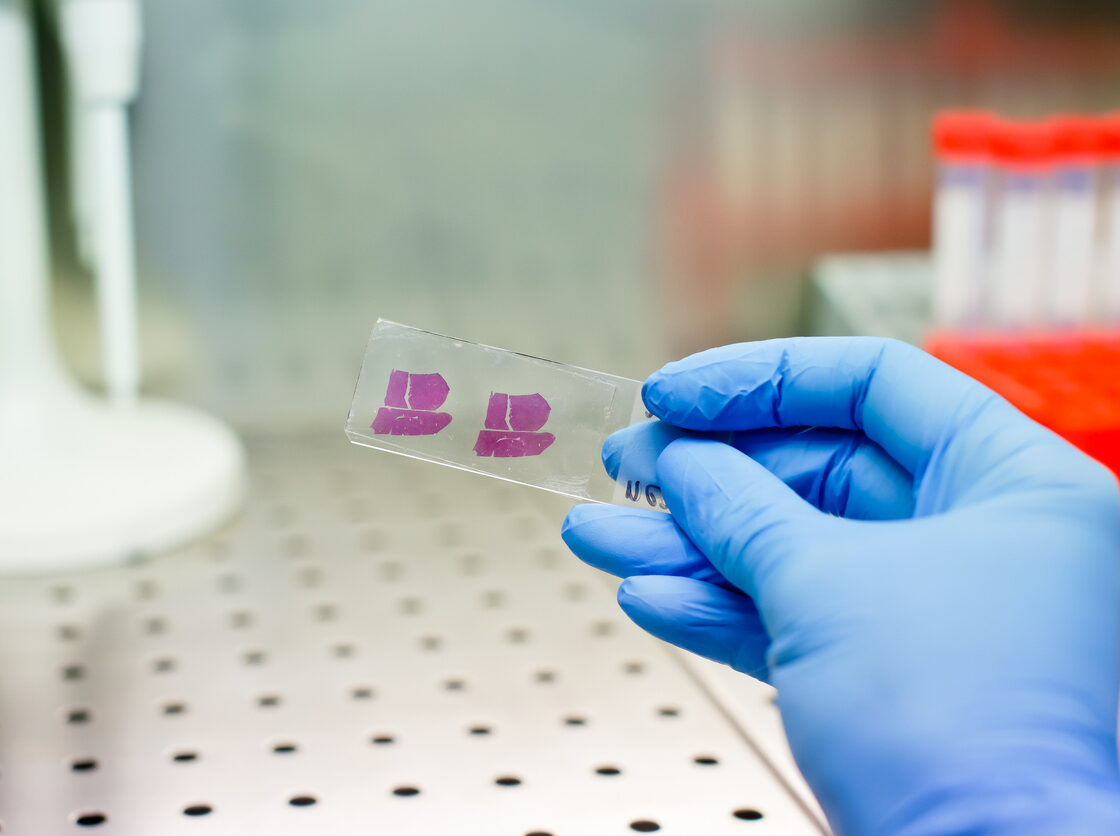
One of the most significant shifts in pathology is the movement toward digital and computational pathology. Traditionally, pathologists evaluate stained glass slides under a microscope. Today, those slides can be converted into high-resolution digital images that contain far more analyzable information than the human eye alone can interpret.
That evolution mirrors what occurred in radiology as imaging transitioned from film-based approaches to digitally enhanced and computationally supported analysis. Pathology is moving in a similar direction, and Medpace is actively building the foundation to support those future capabilities.
How does collaboration across laboratory functions support Sponsors?
One of the strongest collaborations within Medpace’s central labs is between histology and molecular laboratory teams. Histology often serves as the starting point for downstream molecular analysis – preparing and enriching tissue samples before they move into DNA extraction, sequencing, or other molecular workflows. That integration allows Sponsors to work within a more connected laboratory ecosystem, where tissue processing, pathology review, and molecular analysis can be coordinated efficiently across teams.
Histology also works closely with Medpace’s imaging and broader CRO teams to support more integrated study execution, helping Sponsors align tissue-based analyses with imaging assessments, clinical operations, and overall trial objectives.
What types of studies are you currently supporting through histology services?
While oncology remains a major focus area, our histology capabilities support a broad range of therapeutic areas. We are seeing significant demand in studies involving metabolic-associated diseases such as MASH, as well as GI and dermatology research.
At its core, histology supports any study requiring tissue-based evaluation, biomarker assessment, or pathology interpretation. Although many foundational histology techniques have remained consistent for decades, the applications and technologies surrounding them continue to evolve rapidly.
Supporting Sponsors with Histology and Anatomic Pathology Capabilities
Medpace’s central laboratories provide comprehensive histology and anatomic pathology services designed to support oncology, metabolic, GI, dermatology, and other tissue-based clinical research. Our capabilities include tissue processing, sectioning, H&E and special stains, ICH, ISH, digital pathology services, and histologic interpretations supported by board-certified pathologists.
With harmonized laboratory operations, experienced scientific leadership, and ongoing investment in digital pathology infrastructure, Medpace offers a scalable histology program designed to support Sponsors with reliable tissue analysis, collaborative scientific expertise, and operational flexibility across global studies.